LACCD
Project Description
The Los Angeles Community College District is one of the largest community college systems in the United States, serving a diverse population across nine colleges and a central district office in the Los Angeles region.
Project Credits
Creative Direction:
Giorg Yela
Release Date
2025
About the project
Designing a scalable, multi-campus web platform under fixed constraints
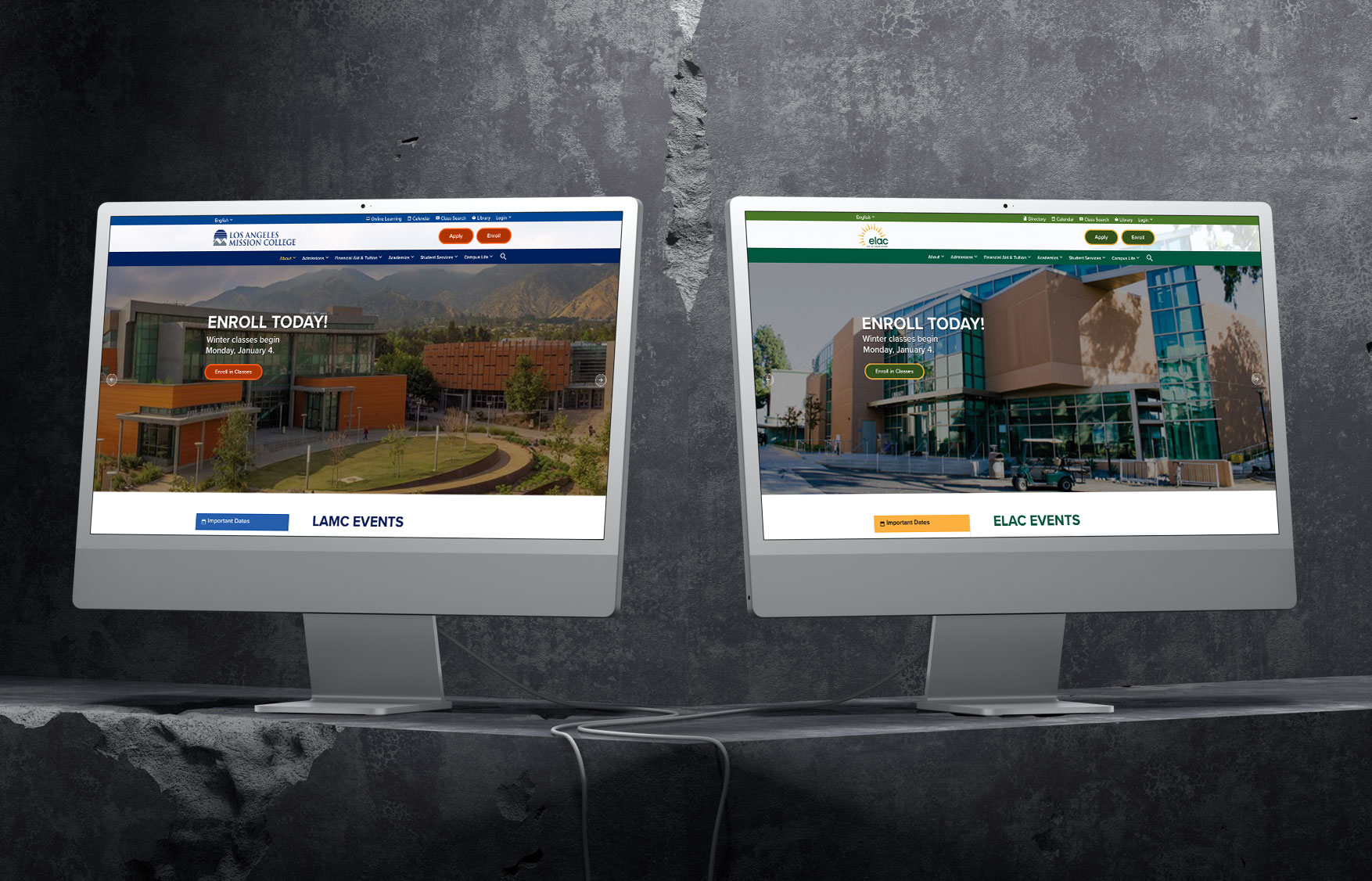
The Los Angeles Community College District required a unified web platform that could support nine individual college websites alongside a central district site. Each campus maintained its own style guide and content needs, while the district required consistency, accessibility, and long-term maintainability across the entire network.
The project was constrained by a limited budget and a fixed launch deadline tied to the start of the academic year. These constraints demanded an approach that prioritized efficiency, reuse, and coordination across multiple teams working in parallel.
Stakeholders from different departments and backgrounds were involved throughout the project, each bringing distinct priorities. Aligning these perspectives required structured communication, clear system rules, and a shared framework that balanced district oversight with campus autonomy.
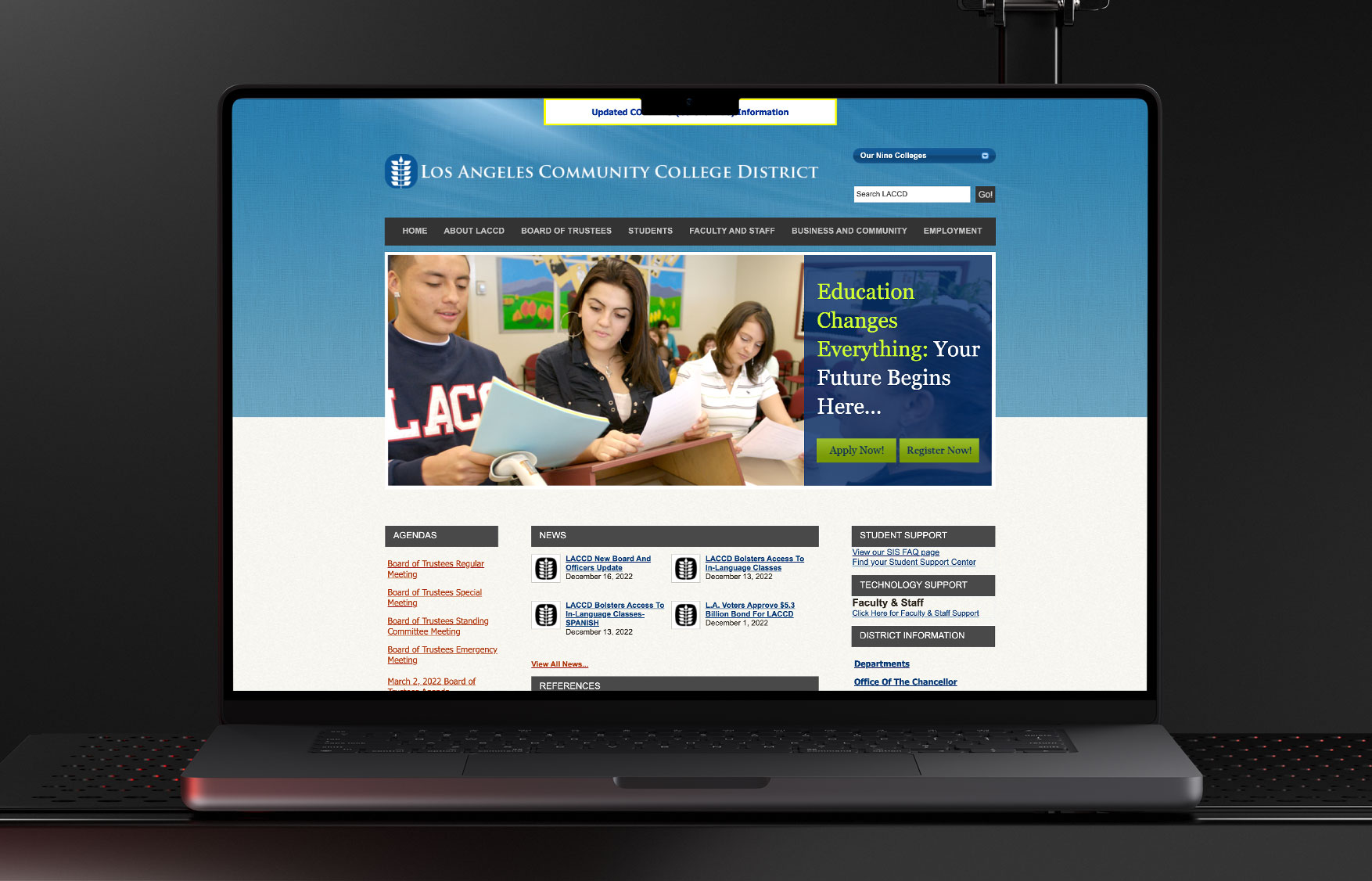
Below: The previous district website was not responsive and relied on dense, information-heavy layouts that made navigation difficult.
Defining Structure and Scale
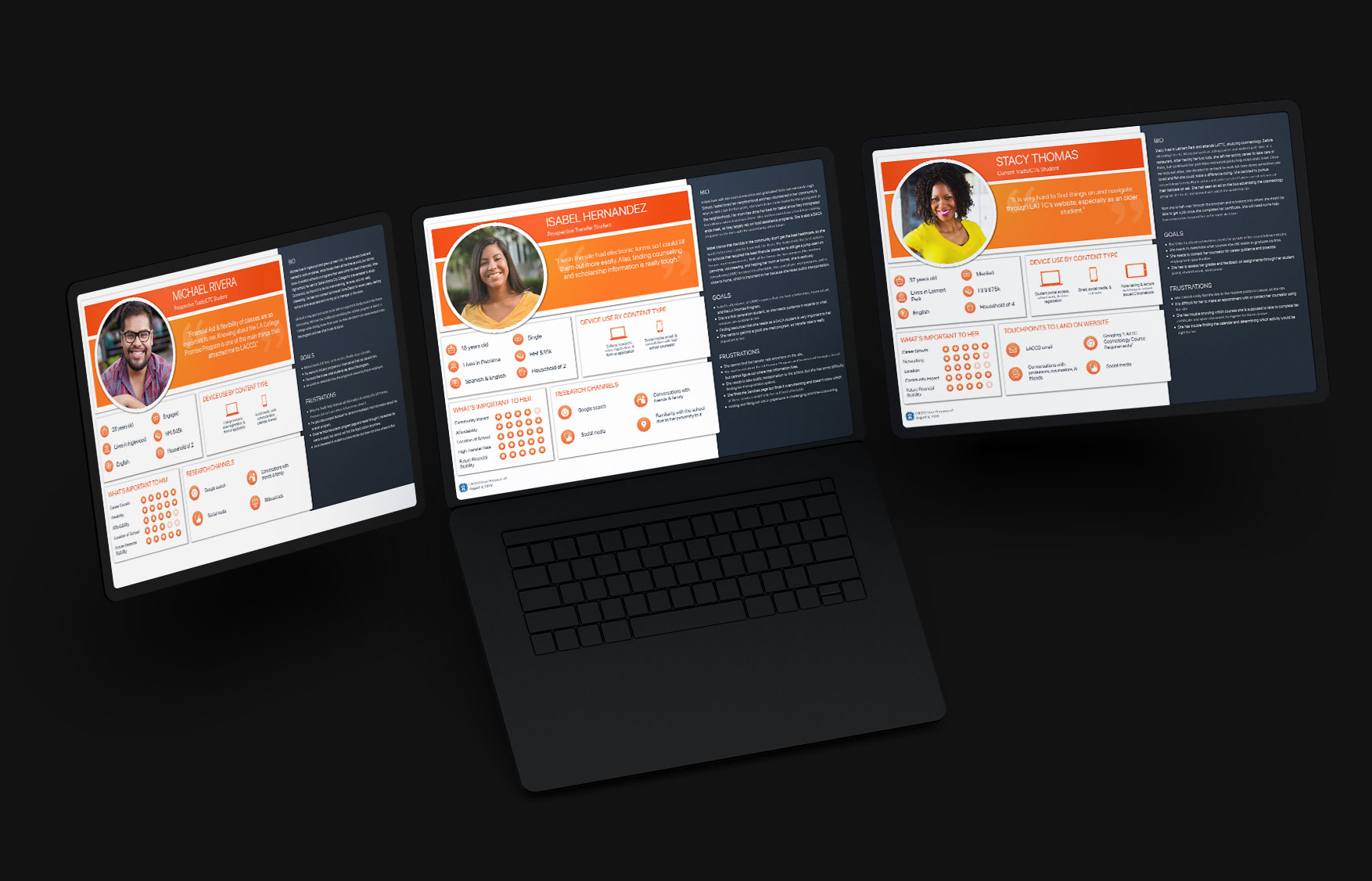
To meet the timeline and budget, the project centered on a templated site architecture supported by a robust design system. Personas were developed from user interviews conducted with stakeholders and students, helping align priorities around what information mattered most and how it should be accessed.
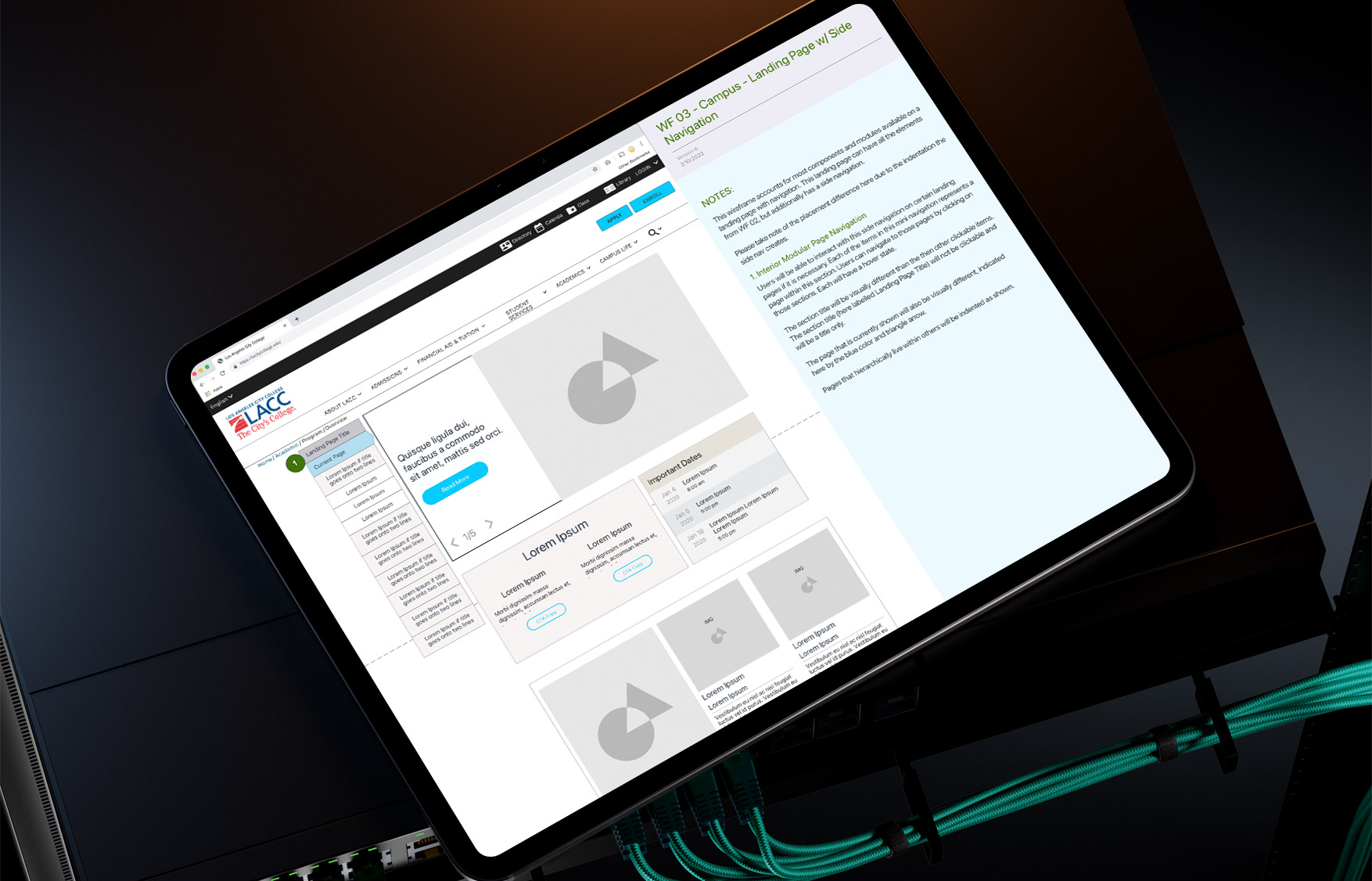
These insights enabled rapid iteration on a revamped sitemap, ensuring navigation was clear, coherent, and consistent across the district and all campus websites. To work efficiently within time constraints, standardized wireframes were created for key page types and reused across campuses, allowing teams to move quickly while maintaining structural consistency.
The team scaled to support parallel site analysis, content migration, and copy updates, aligning existing content to shared component structures. Weekly stakeholder meetings and focused working sessions helped capture evolving requirements and keep the project on schedule.
Below: User personas and templated wireframes used to define structure and scale across all campuses.
Establishing the Visual System
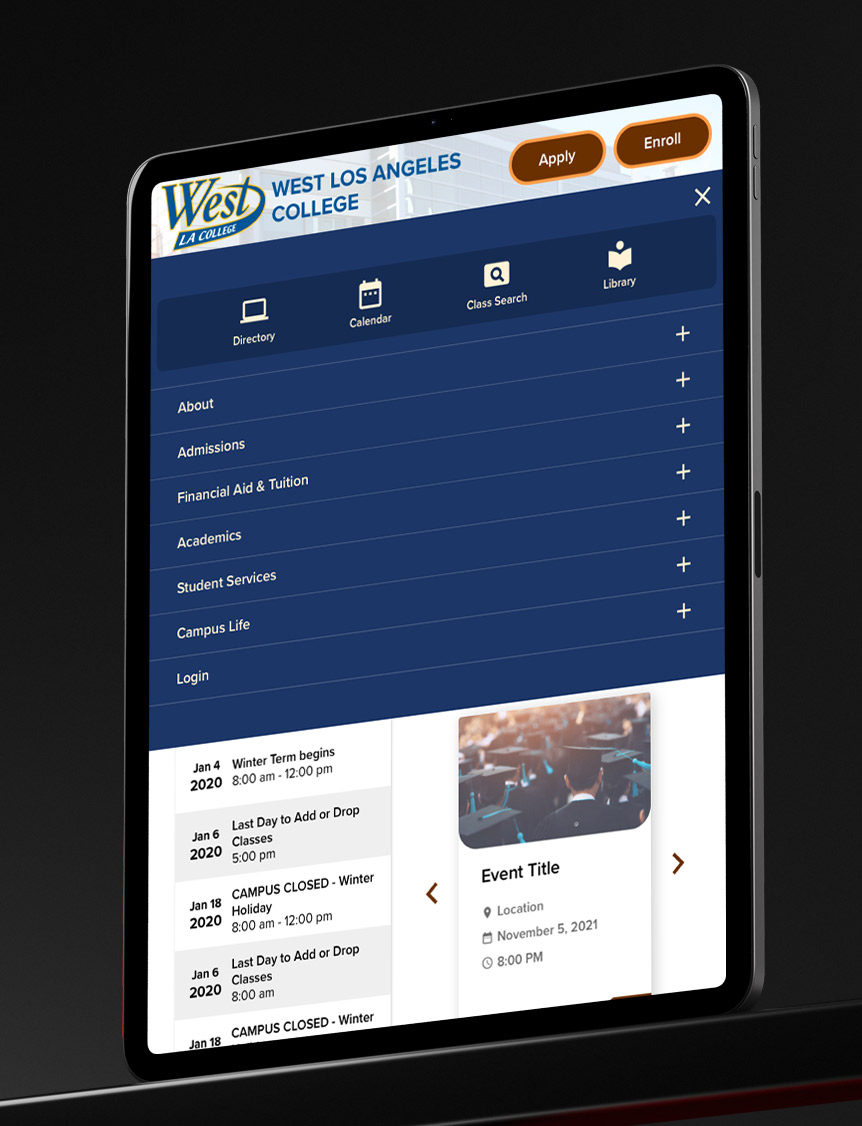
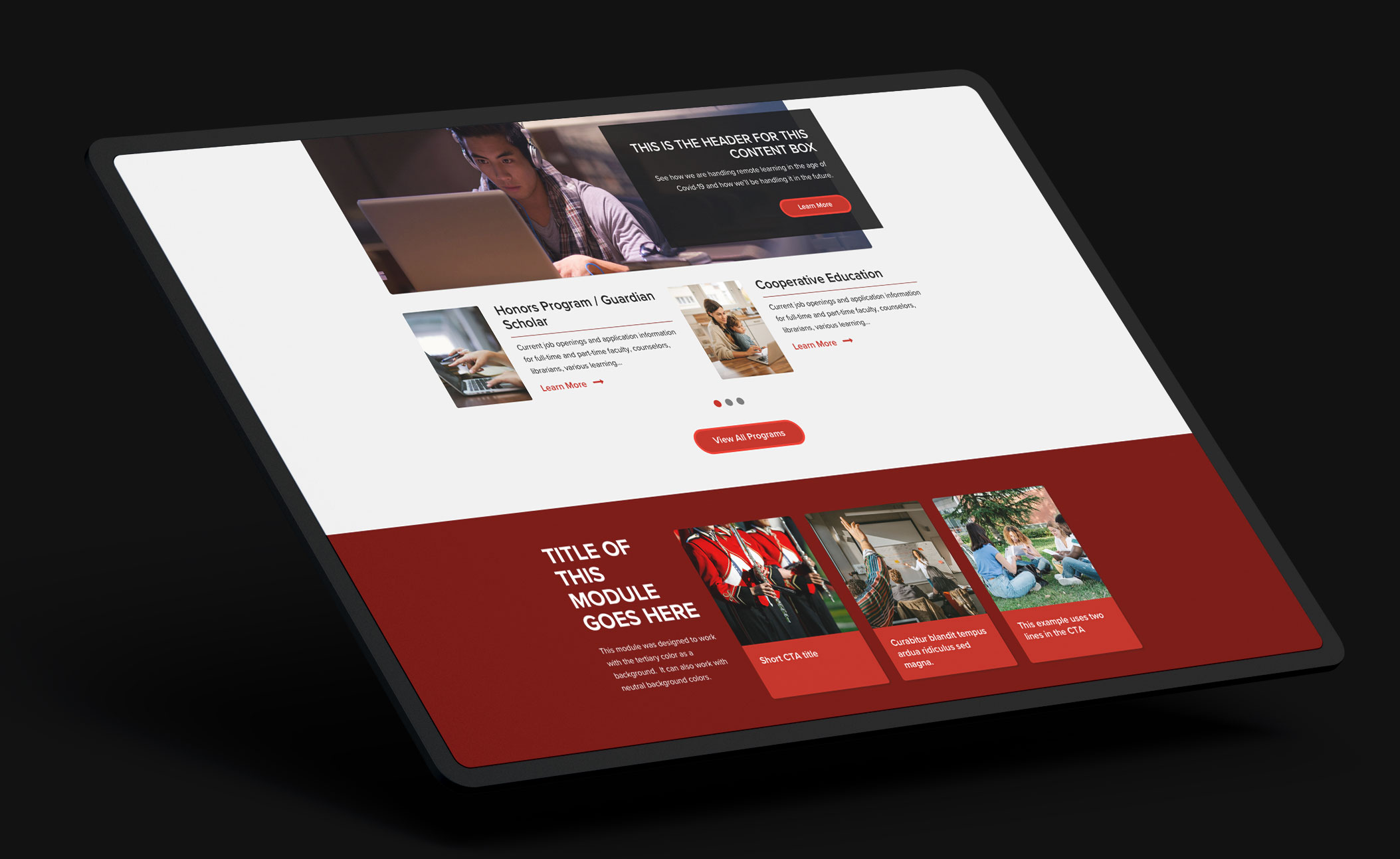
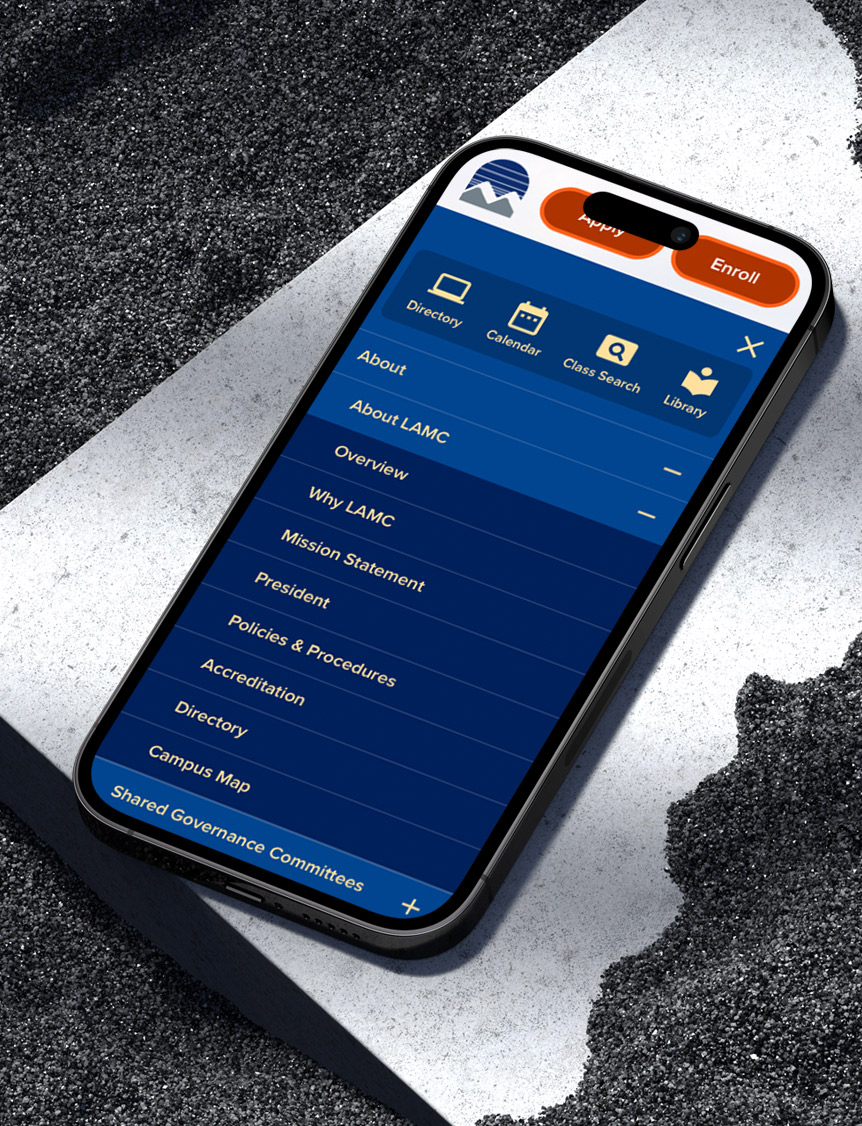
A flexible visual system was created to ensure consistency, accessibility, and scalability across all sites. Shared components and templates enforced standards for layout, hierarchy, and usability, while theming capabilities allowed each college to express its identity within defined system boundaries.
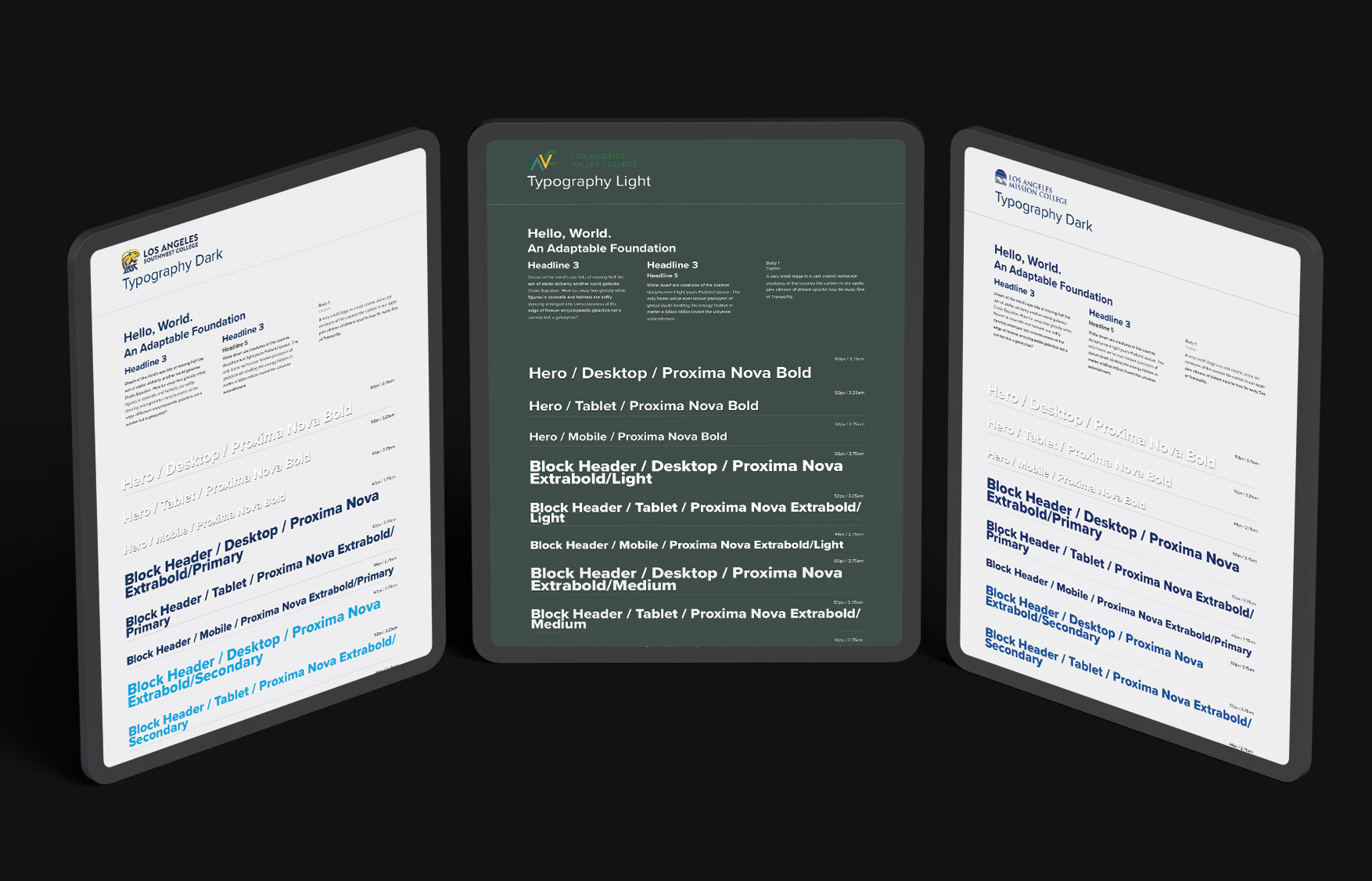
A comprehensive color system was developed to give the district and campuses maximum flexibility in how components and typography were applied across different contexts. The system supported both light and dark background structures, enabling layouts to adapt to content needs while maintaining contrast, legibility, and accessibility. This effectively established parallel light and dark frameworks within the design system, which were implemented in development and supported across all components.
Analytics informed which screen sizes to prioritize, allowing designs to focus on the most commonly used devices across the district’s audience. Faculty and student usability testing evaluated district and campus prototypes through task based scenarios and qualitative feedback. These insights guided refinements, validated design decisions, and strengthened the system prior to broader rollout.


No items found.

Delivering a Unified Network
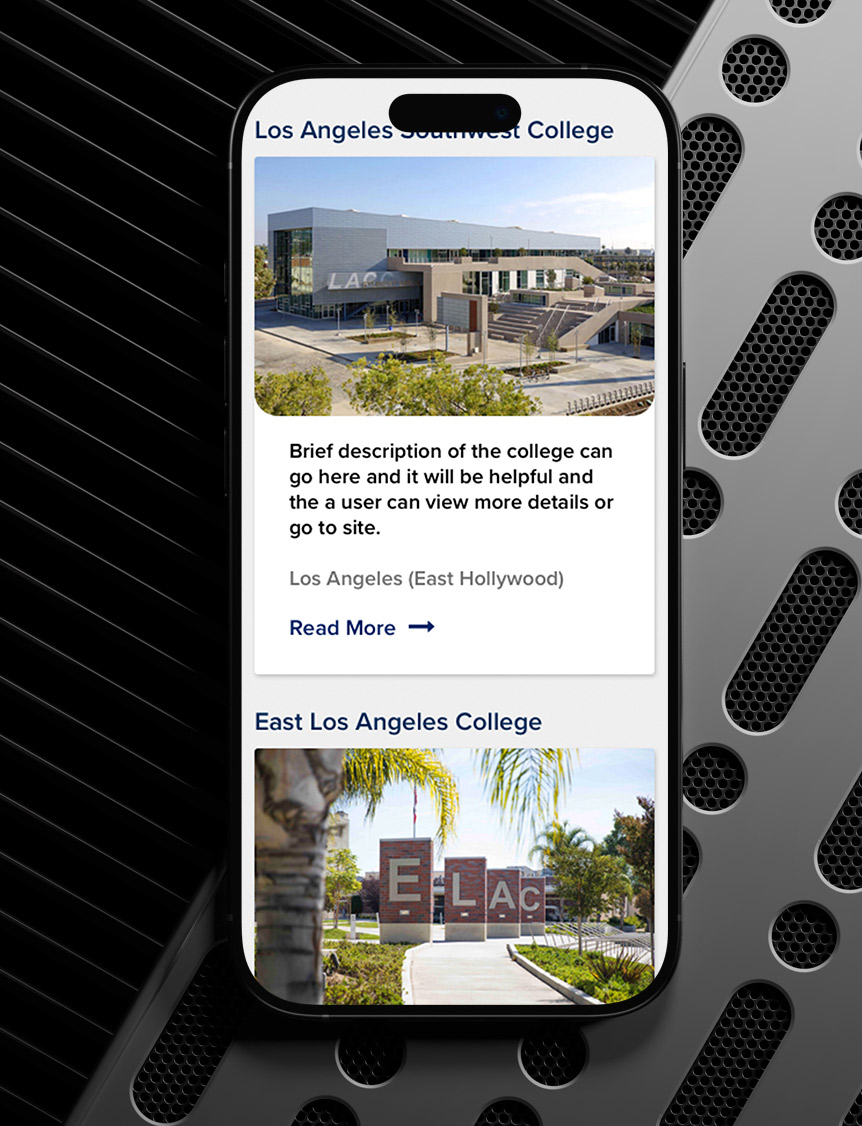
The project launched on schedule ahead of the academic year, delivering a cohesive digital framework across all nine colleges and the district site. Significant effort was dedicated to ensuring WCAG accessibility standards were met across templates, components, and content patterns, supporting an inclusive experience for all users.
A well documented style guide was created to define how components, typography, and layouts should be applied across the system. This documentation supported consistent implementation, simplified content management, and enabled teams to maintain the platform with confidence over time. Together, these efforts established a sustainable foundation that supports long term governance, reduces maintenance complexity, and allows the district and campuses to evolve within a unified system.
No items found.